Publication date: 21 September 2026.
Claim
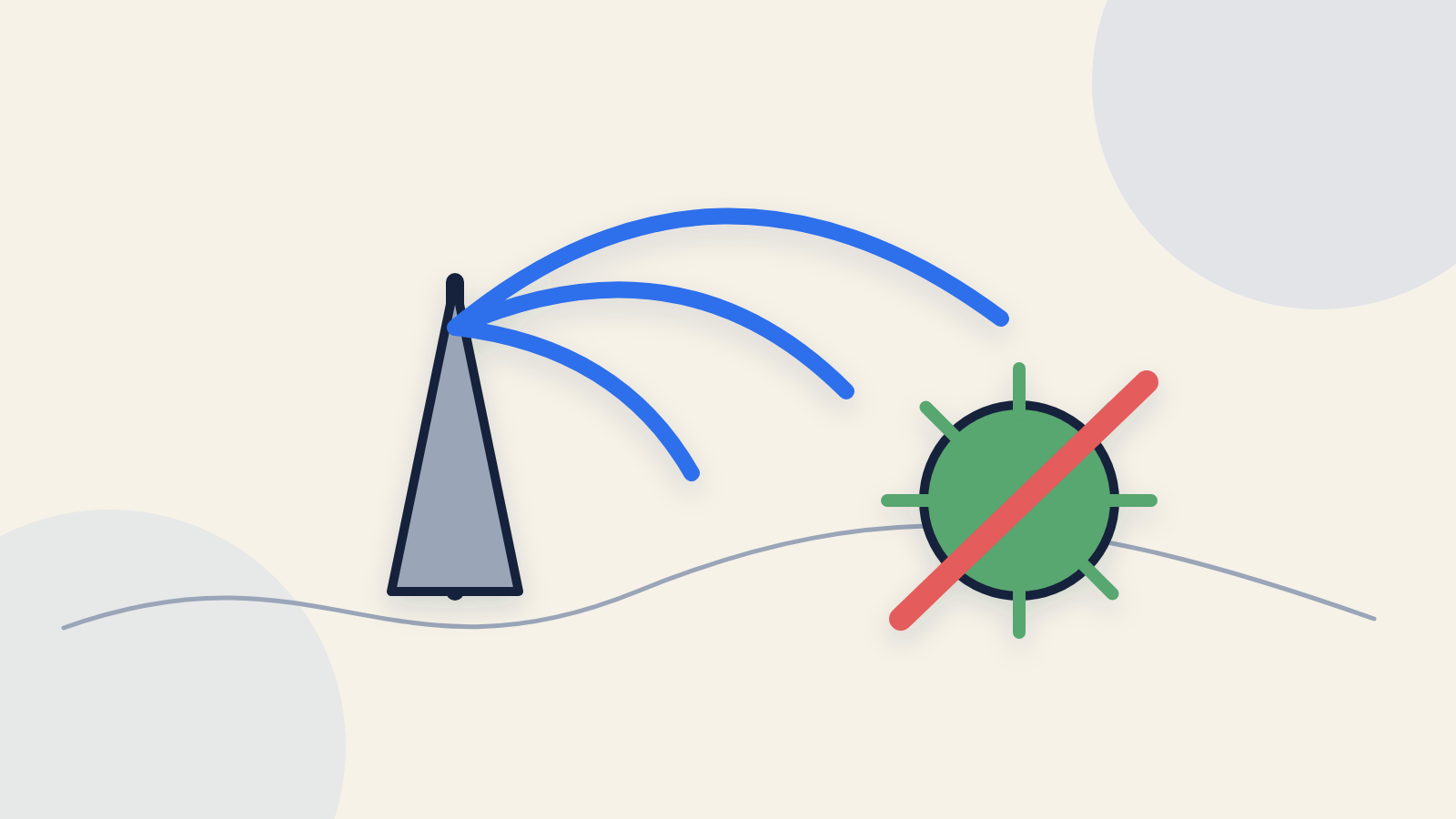
5G mobile networks supposedly cause COVID-19 or transmit the coronavirus. This is a check of an established myth, not a report of a new disinformation surge in September 2026.
The BBC report “Coronavirus: 5G and microchip conspiracies around the world” documented such claims in videos and social media, including circulation through Russian-language YouTube and Facebook accounts. We use that report as evidence of the claim's historical circulation, not as a measurement of its reach today.
Verdict
False. COVID-19 is caused by the SARS-CoV-2 virus, which spreads between people, including through virus-containing particles in the air. A mobile network transmits information by radio signal; it does not carry infectious particles. The European Commission explicitly identifies linking 5G with the COVID-19 outbreak as disinformation.
In brief
• Transmitting data and transmitting an infection are different physical processes.
• WHO describes infection through particles released by an infected person when breathing, talking, coughing or sneezing.
• A coincidence in the timing or location of network deployment and illness does not, by itself, establish causation.
• Checking this myth does not replace a separate assessment of compliance with electromagnetic exposure rules at a particular installation.
Why this matters
A false explanation of infection distracts from actual transmission routes. Blaming an antenna instead of infectious air in a poorly ventilated room directs attention away from the relevant risk.
Communications can suffer too. The BBC described damage to telecommunications antennas amid these rumours, including in the United Kingdom. These are historical incidents, not reports of new attacks in Lithuania, Belarus or Ukraine. For Russian-speaking readers, the claim illustrates how a technical term can be turned into an explanation of disease without a demonstrated mechanism.
What we checked
We compared three different kinds of sources: WHO's explanation of SARS-CoV-2 transmission, the European Commission's account of 5G and electromagnetic fields, and the BBC's documentation of the myth's circulation.
The claim under examination is narrow: whether a 5G network can cause COVID-19 or spread its pathogen. We did not assess the safety of every base station, every possible radiofrequency effect or the quality of any particular operator's service.
Evidence
1. The disease has an infectious cause and documented transmission routes
WHO's explanation dated 23 December 2021 identifies SARS-CoV-2 as the virus that causes COVID-19. It can leave an infected person's mouth or nose in small liquid particles when they cough, sneeze, speak, sing or breathe. Another person may inhale infectious particles.
WHO also explains the increased risk in crowded, poorly ventilated indoor spaces: aerosols can remain in the air and travel farther than conversational distance. These are material particles containing a virus, not radio waves. “Airborne transmission” does not mean “transmission through a wireless network”.
2. The European Commission directly addresses the false 5G link
Its page “5G and electromagnetic fields”, updated on 9 July 2025, identifies linking 5G networks with the COVID-19 outbreak as an example of disinformation.
The same page discusses electromagnetic exposure limits and applicable national or regional rules. That is a separate equipment-regulation question. The existence of such rules does not show that antennas transmit an infection; debunking the myth does not remove the need to comply with those rules either.
3. The rumour also circulated where the relevant network did not exist
The BBC reported that videos showing telecommunications equipment and claims connecting 5G with coronavirus accompanied attacks on antennas in Bolivia. According to a Bolivia Verifica journalist quoted by the BBC, the country did not have 5G technology at the time.
This historical example exposes the weakness of the argument that finding an antenna identifies the cause. The main conclusion, however, rests on the established infectious cause of the disease and the absence of the alleged transmission route through a mobile network, rather than on a single incident.
What remains unknown
We did not measure the myth's current prevalence in Belarus, Lithuania, Ukraine or among Russian-speaking users. Historical video views cannot establish today's reach or attribute a campaign to a particular state.
Nor did we measure electromagnetic fields. Assessing a specific station requires technical data and the applicable standards, not generalisations from this fact-check. Medical advice and information about virus variants should be checked against up-to-date public-health guidance.
Conclusion
A 5G network is not a route of SARS-CoV-2 transmission and does not cause COVID-19. The virus spreads when people encounter infectious particles. A message that replaces this mechanism with a picture of an antenna or a coincidence of dates does not establish a connection.
Sources
1. WHO. Coronavirus disease (COVID-19): How is it transmitted? 23 December 2021. https://www.who.int/news-room/questions-and-answers/item/coronavirus-disease-covid-19-how-is-it-transmitted
2. European Commission. 5G and electromagnetic fields. Updated 9 July 2025. https://digital-strategy.ec.europa.eu/en/policies/5g-and-electromagnetic-fields
3. BBC. Coronavirus: 5G and microchip conspiracies around the world. Historical documentation of the claims' circulation. https://www.bbc.com/news/53191523
Corrections and updates
Sources checked on 21 September 2026. No corrections at publication. To report an error, email unity.bridge.sp@gmail.com with the article title, the passage concerned and a verifiable source. Substantive corrections will be recorded here with a date and explanation.